

Photographs present brave struggle with Nazis
- The Warsaw Ghetto rebellion was the primary city rebellion in German-occupied Europe.
- The Warsaw Ghetto rebellion would later encourage extra acts of resistance in World Struggle II.
- Jewish resistance typically took the type of help and rescue.
- Established in 1940, Warsaw held about 400,000 Jews, the biggest Ghetto in World Struggle II.
On the eve of the Passover vacation 80 years in the past, courageous Jewish rebels in German-occupied Europe waged an rebellion that later would gasoline extra resistance efforts in opposition to the Nazis.
Acts of resistance on April 19, 1943, in Poland, later termed the Warsaw Ghetto rebellion, stay a potent image for remembering the victims of the Holocaust and are tied to a memorial day meant to honor brave and heroic fighters.
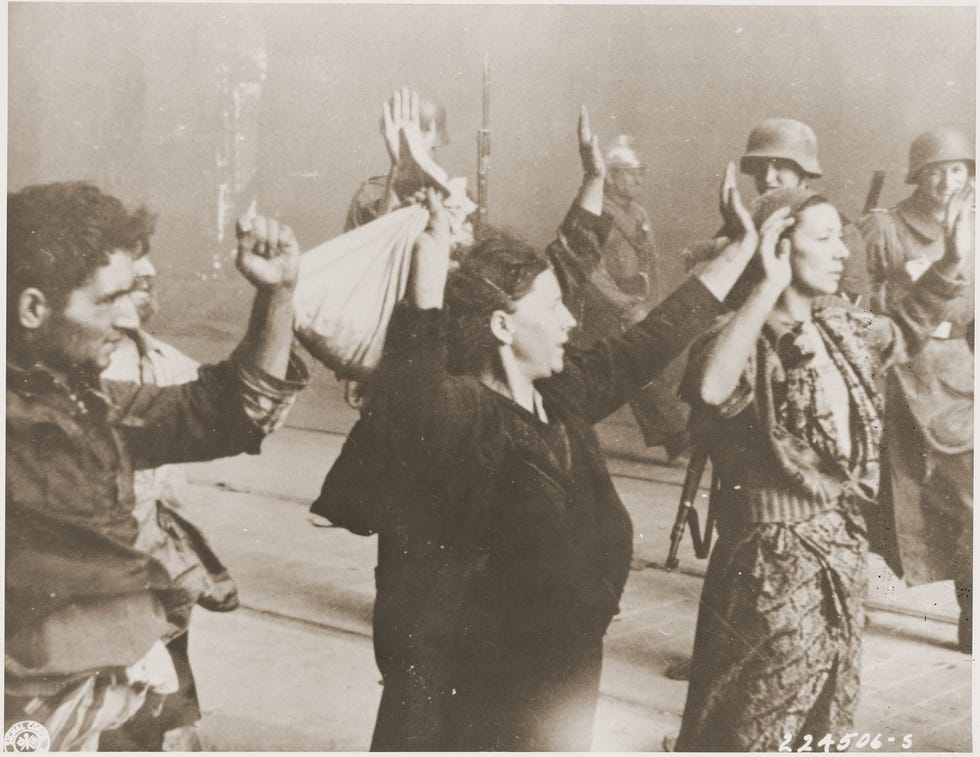
About 700 younger Jewish fighters took up arms within the “largest and, symbolically, most vital” rebellion after the Nazis stationed a military across the Warsaw Ghetto to deport its surviving inhabitants, in line with the United States Holocaust Memorial Museum.

With the data 50,000 Jews who remained within the Ghetto couldn’t be saved from inevitable demise, the rebellion turned an extremely dangerous and last-ditch effort to go down combating and have a say in how they’d die.
“They fought for the sake of Jewish honor and to avenge the slaughter of so many Jews,” stated Sheryl Silver Ochayon, program director at Yad Vashem, the World Holocaust Remembrance Middle. “It (Warsaw Ghetto rebellion) prevalence shattered the bounds of the creativeness.”
With every passing 12 months, the ceremony of remembrance turns into extra pressing because the variety of those that skilled the Holocaust continues to dwindle.


What have been circumstances main as much as it?
Warsaw was town with the biggest Jewish inhabitants in prewar Europe.
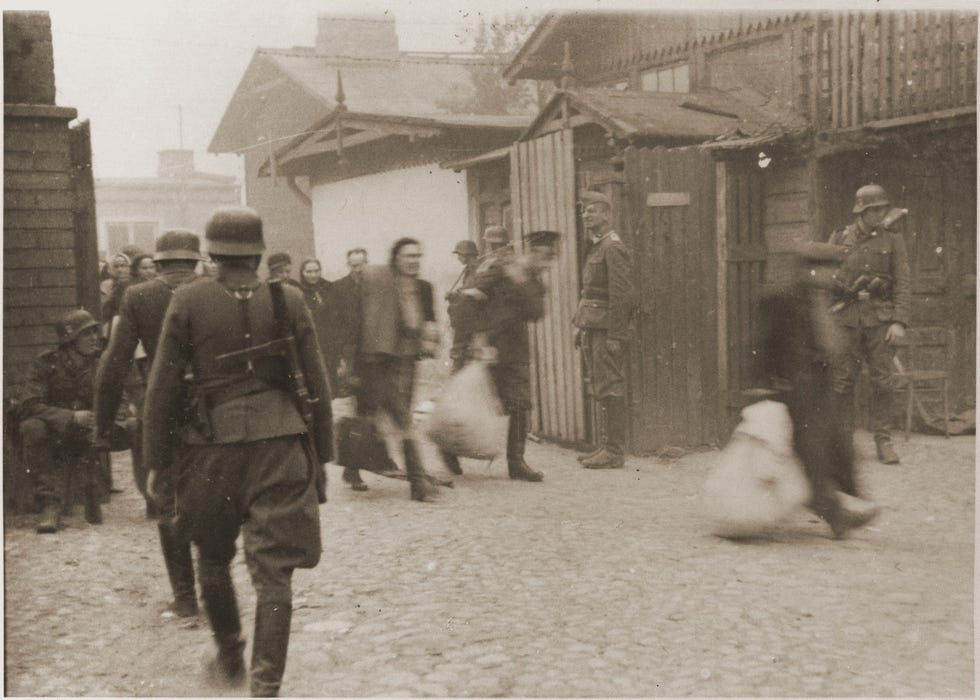
In October 1940, all Jewish residents of Warsaw – nearly 30 p.c of town’s inhabitants – have been pressured to maneuver right into a small space, sealed off from the remainder of town, in what turned often known as the Warsaw Ghetto.

A month after German authorities established the ghetto, Jews have been enclosed by a 10-feet-high wall with barbed wire and carefully guarded. Residents have been pressured to dwell in an space of 1.3 sq. miles, with a mean of seven.2 individuals per room.
Between January 1941 and July 1942, Jews from smaller close by communities in Germany and German-occupied areas of western Poland have been deported to the ghetto.

Overcrowding and meals shortages intentionally exacerbated by German insurance policies –together with a meals ration at simply 181 energy a day – led to an especially excessive mortality fee within the ghetto.
In 1941, one 12 months earlier than mass deportations, one Jew died on common each 9 minutes from infectious illnesses, hunger or Nazi violence.
Between 1940 and 1942, roughly 83,000 Jews died of hunger and illness.
Jewish organizations, together with the Jewish Mutual Assist Society, the Federation of Associations in Poland for the Care of Orphans, and the Group for Rehabilitation by Coaching, tried to satisfy the wants of the residents as they struggled to outlive by smuggling meals and medicines.
Deportations encourage self-defense unit

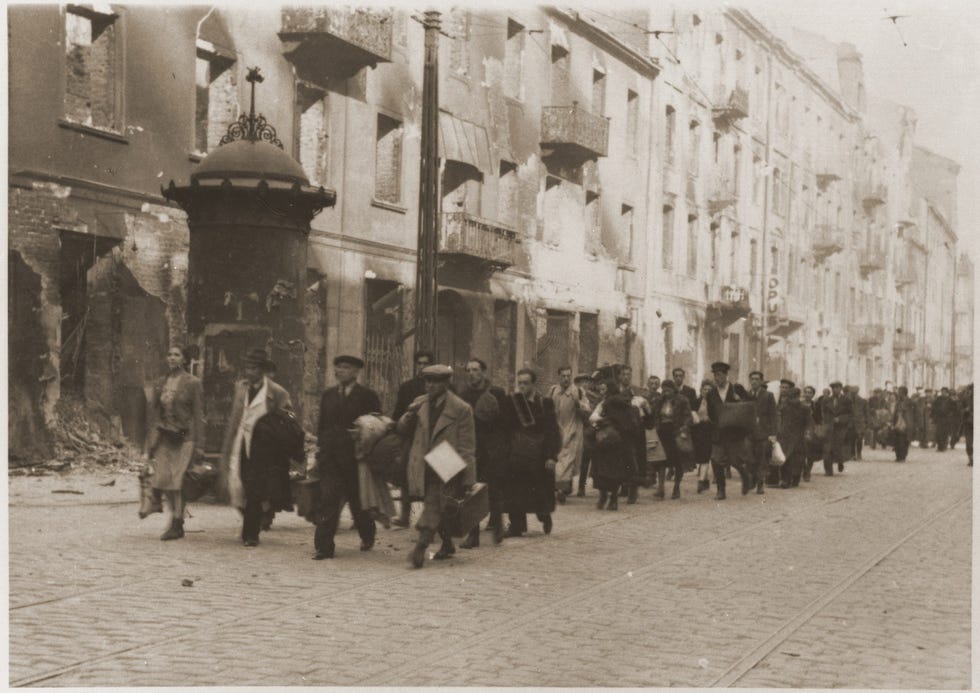
Round two-thirds of the Warsaw Ghetto, some 265,000 folks, have been deported to the Majdanek and Treblinka demise camps in the summertime of 1942. In response, a number of Jewish underground organizations banded collectively that July to create an armed self-defense unit often known as the Jewish Fight.
By early 1943, the surviving Jews within the Warsaw Ghetto numbered roughly 70,000 to 80,000 people.
The next spring, the Nazis started getting ready to deport the ghetto’s remaining Jews to their deaths.
What did Jewish resistance appear to be earlier than the rebellion?
Jewish civilians in over 100 ghettos in Poland and the Soviet Union provided a forceful type of opposition beneath probably the most antagonistic circumstances – organized armed resistance in opposition to Nazi-occupiers.
Their fundamental objectives included organizing uprisings, fleeing the ghettos and becoming a member of partisan models within the struggle in opposition to the Germans.
Jewish prisoners organized escapes to affix partisan models in a number of dozen camps and killing facilities.


In an earlier act that got here to be often known as the “January rebellion,” varied teams of fighters had fired the primary pictures in opposition to the enemy. Underneath the management of Mordecai Anielewicz, Zivia Lubetkin and Zecharia Arnstein, fighters pulled hid weapons out of their pockets, fired on the Germans and ambushed them on the street from the home windows of residences above.

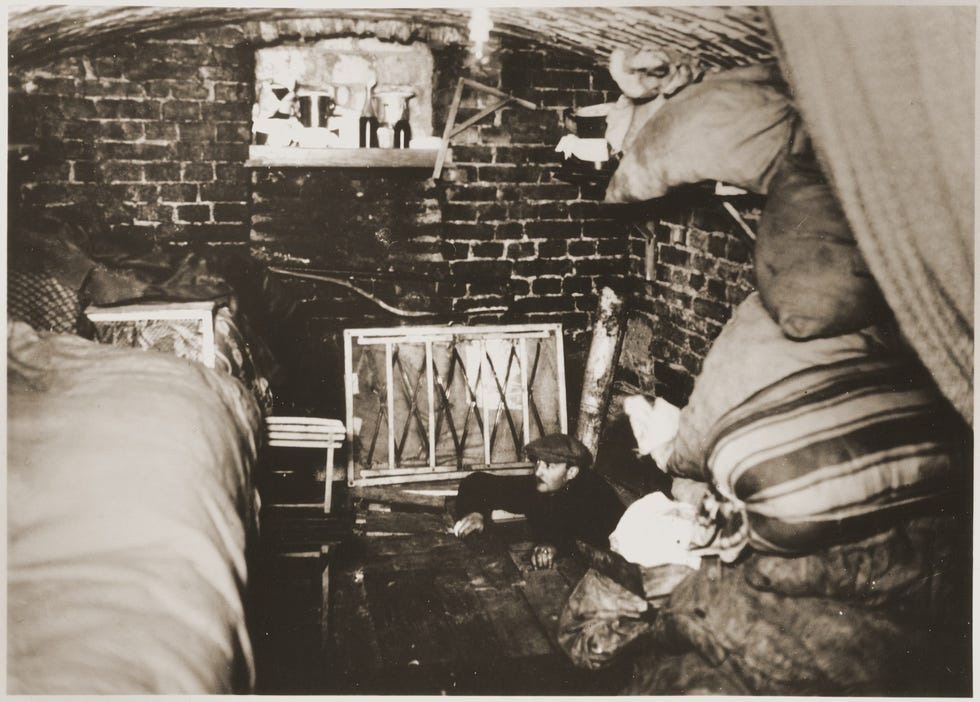
Scared of current mass deportations to killing facilities, many Jews in Warsaw sought refuge in bunkers when extra troops arrived. Nazis tried to grab folks from the streets however had a troublesome time apprehending residents.
“The Jews started to appreciate that it was not solely potential to kill Germans, however to stay alive afterwards,” Ochayon stated. “This led to a pointy change within the psychology of the Jewish neighborhood.”
Between January and April, 1943, the inhabitants of the ghetto labored to arrange subterranean bunkers and hiding locations with shops of meals, water, and in some instances electrical energy.
The rebellion
With Molotov cocktails, hand grenades and a handful of small arms, members of the Jewish Combating Group and different teams rose in armed revolt and attacked Nazis getting into the ghetto with bikes, tanks, mild cannons and armored autos.
Every fighter had a revolver and one hand-grenade. All the unit had two rifles and made selfmade bombs, the sort the place a fuse needed to be lit with a match, Lubetkin, a frontrunner of the Jewish underground in Poland and a fighter within the Warsaw Ghetto rebellion, stated in a 1961 testimony on the Eichmann trial.
Throughout the rebellion, residents resisted German forces by refusing to assemble at assortment factors and burrowing in underground bunkers.
With a view to find the underground bunkers the Germans made use of canine, listening units, and informers.
German troops used long-range weapons and flamethrowers to pulverize and torch the buildings, turning it right into a blanket of flame and rubble.


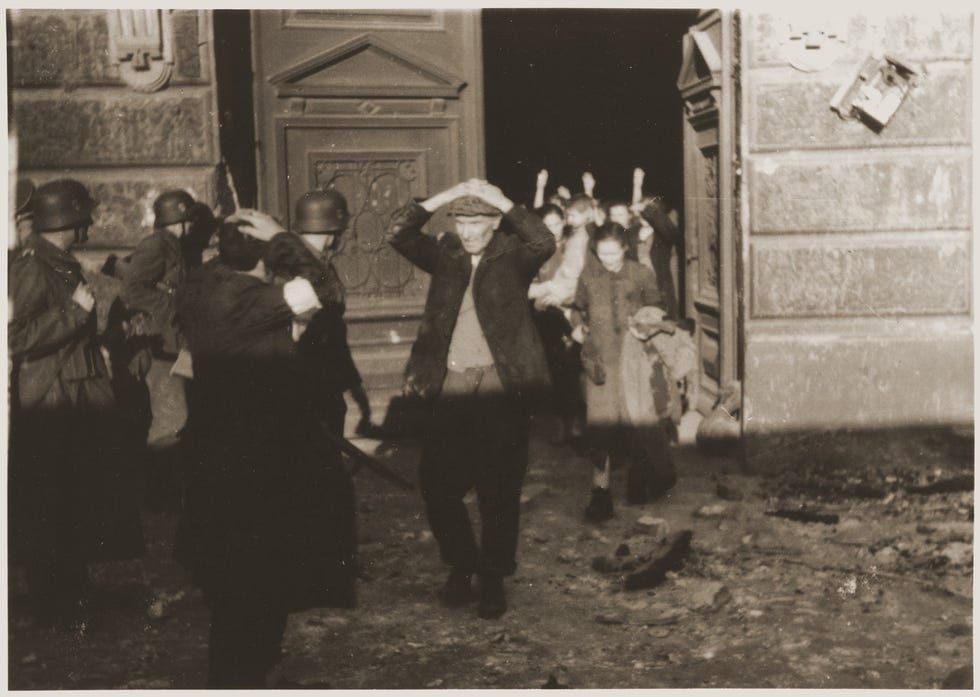

On the primary day, the Germans have been pushed out of the ghetto, however they have been finally capable of finish the main combating inside just a few days. It took almost a month earlier than they have been capable of fully pacify the ghetto and deport the remainder of the remaining inhabitants.
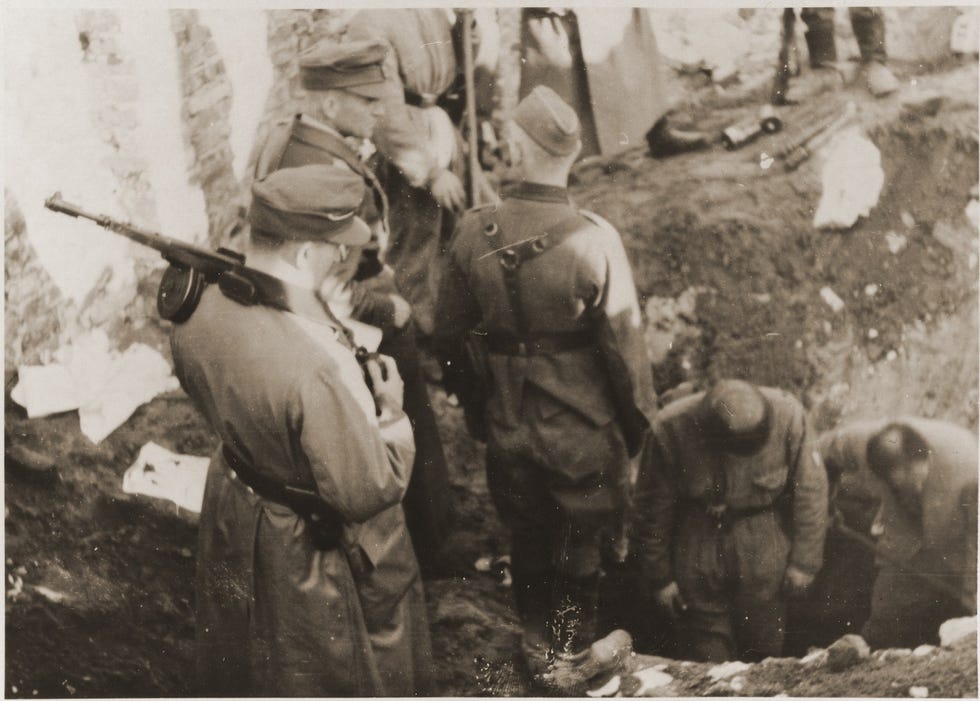
Most fighters of the resistance took their very own lives somewhat than fall to German troops.
“It’s unimaginable to place into phrases what we now have been by. One factor is obvious, what occurred exceeded our boldest goals,” Mordecai Anielewicz, chief of the ZOB forces, wrote April 23, 1943, in a letter smuggled out of the burning ghetto and left in a Jewish cemetery. “The dream of my life has risen to turn into truth. Self-defense within the ghetto can have been a actuality.”
The rebellion, which was crushed by Might 16, 1943, led to the deaths of a minimum of 7,000 Jews who fought or hid.
Throughout the identical 12 months, Jews resisted the Germans in Vilna (Vilnius), Bialystok, and quite a few different ghettos. Jewish prisoners rose in opposition to their guards at three killing facilities. At Treblinka and Sobibor, prisoners armed with stolen weapons attacked the SS workers and guards.
Camille Superb is a trending visible producer on USA TODAY’s NOW group.
Share this content: