

Coastal marine animals are thriving there
There’s life amidst the rubbish.
Marine animals that normally solely dwell in coastal areas of the western Pacific Ocean have been discovered dwelling and reproducing on plastic particles on the excessive seas, in the Nice Pacific Rubbish Patch, based on a new research revealed Monday.
The research, which is among the many first to doc the creation of a synthetic, floating habitat for coastal marine life within the open ocean, was revealed within the peer-reviewed British journal Nature Ecology and Evolution.
The analysis was led by Linsey Haram, a scientist with the Smithsonian Environmental Analysis Heart in Edgewater, Maryland, which stated “these discoveries increase many difficult questions on the way forward for our oceans within the context of the worldwide plastic air pollution disaster.”
A brand new neighborhood within the ocean
Scientists collected 105 gadgets of floating plastic particles within the rubbish patch and located proof of dwelling coastal species on 70.5% of the particles analyzed. The particles was collected between November 2018 and January 2019.
They recognized 484 separate marine organisms on the particles, of which 80% had been species which are usually present in coastal habitats.
“It seems that coastal species persist now within the open ocean as a considerable part of a ‘neopelagic’ neighborhood sustained by the huge and increasing sea of plastic particles,” the authors write within the research. (A “neopelagic” neighborhood is a new sort of ecological neighborhood within the ocean.)
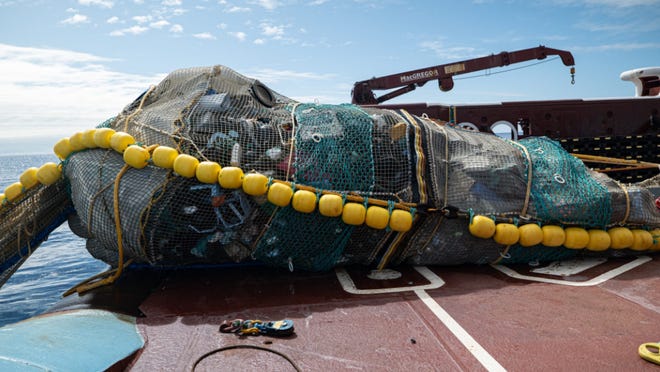
Ocean cleanup:They pulled 63,000 kilos of trash from the Nice Pacific Rubbish Patch, however that is simply the beginning
What’s the Nice Pacific Rubbish Patch?
The Nice Pacific Rubbish Patch, a set of primarily plastic, floating trash midway between Hawaii and California, is greater than 600,000 sq. miles massive, current research have proven. That is twice the dimensions of Texas.
Whereas there are no less than 5 rubbish patches on the earth, the Nice Pacific Rubbish Patch, additionally known as the North Pacific Subtropical Gyre, holds probably the most plastic. This patch incorporates no less than 79,000 metric tons of trash, together with fishing nets, bottles and tiny plastic fragments known as microplastics, based on a 2018 research revealed in Nature.
First found within the early Nineteen Nineties, the trash within the patch comes from across the Pacific Rim, together with nations in Asia and North and South America.
The patch just isn’t a strong mass of plastic. It contains about 1.8 trillion items and weighs 88,000 tons – the equal of 500 jumbo jets.
Rubbish patch:World’s largest assortment of ocean rubbish is twice the dimensions of Texas
What critters had been discovered within the rubbish?
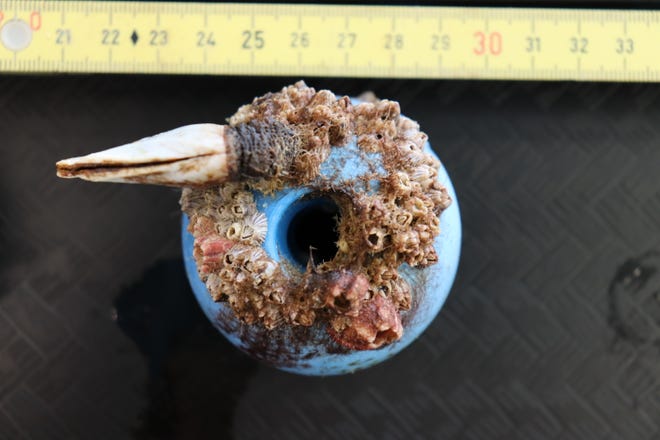
Animals found within the patch embrace crustaceans, sea anemones, mollusks, and worms, the authors stated.
Species already recognized to dwell within the open ocean had been thriving on the plastic rubbish too, lead creator Haram instructed NPR, however “we additionally noticed this very distinguished and numerous group of coastal species that truthfully, we simply would not have anticipated to search out.”
Moderately than the rubbish patch being inhospitable to coastal-dwelling species, plainly coastal critters reside lengthy sufficient to breed, ScienceAlert reported.
Certainly, the research authors discovered proof of sexual replica amongst each coastal and open-ocean species.
The research additionally discovered that the variety of all organisms was highest on rope, and that fishing nets harbored the best variety of coastal species.
A thriving new neighborhood:Scientists name it a ‘floating plastic habitat.’
Share this content: