

How you can watch, the place to search for peak bathe
Sky gazers are in for a particular deal with this month because the beloved Lyrids meteor bathe makes its annual return.
The Lyrids meteor bathe has been noticed for two,700 years, making it one of many oldest-known meteor showers on file. The primary reported Lyrids sighting dates again to 67 BC in China, in accordance with NASA.
The Lyrids are items of particles from the Comet C/1861 G1 Thatcher. In April of every 12 months, Earth runs into the stream of particles from the comet, inflicting the meteor bathe.
In 2023, the Lyrids meteor bathe is energetic beginning Saturday, April 15, and can run for 2 weeks, NASA says.
The American Meteor Society describes the Lyrids meteor bathe as a “medium power bathe.” Whereas the Lyrids convey quick and shiny meteors, they are not as plentiful as showers just like the August Perseids, NASA notes.
“Lyrids don’t have a tendency to depart lengthy, glowing mud trains behind them as they streak by way of the Earth’s environment, however they will produce the occasional shiny flash referred to as a fireball,” NASA provides.
This is what you could know.
The Lyrids meteor bathe:A visible information on the place, when and tips on how to view
Finest stargazing occasions of 2023:How you can see inexperienced comet, meteor showers and an eclipse this 12 months
When is the Lyrids meteor bathe and its 2023 peak?
In 2023, the Lyrids will probably be energetic from Saturday (April 15) by way of April 29. The bathe will peak April 21 and April 22, NASA says.
Within the U.S., the perfect time to view the Lyrids’ 2023 peak will probably be round 9 p.m. ET on April 22, in accordance with predictions from the American Meteor Society.
In a handful of extraordinary years, the Lyrids have shocked stargazers with as much as 100 meteors an hour, NASA notes. However, for many years, viewers can sometimes count on 10 to twenty meteors through the peak.
“The traditional Lyrid show, seen beneath moonless situations, often presents a peak of round 10 meteors per hour along with the traditional random meteor charge of about 5 per hour,” the American Meteor Society writes.
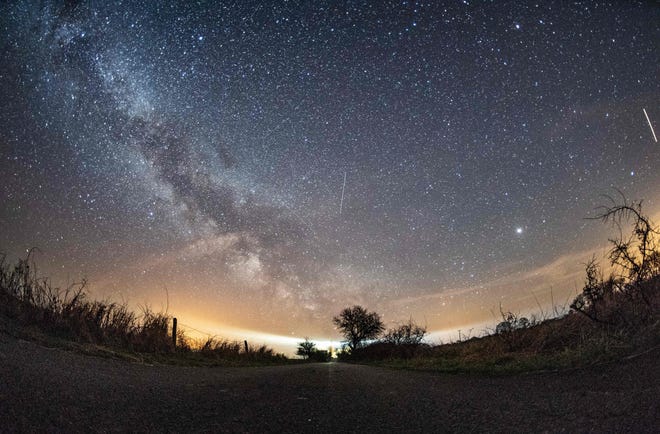
The place to see the Lyrids meteor bathe
Whereas individuals can see the Lyrids across the globe, this meteor bathe is most simply considered within the Northern Hemisphere throughout darkish hours.
The Lyrids’ radiant level, or the place within the sky the place meteors seem to emerge from, is “far to the north on the sky’s dome,” EarthSky notes. That makes it more durable to see the bathe within the Southern Hemisphere – but it surely’s nonetheless attainable to see a couple of meteors.
Pictures of area:Iconic first black gap image is now sharper, because of new machine-learning tech
In keeping with NASA, the Lyrids’ radiant level is close to the constellation Lyra – and the meteors seem to radiate from the realm round Lyra’s brightest star, Vega. Nonetheless, the Lyrids can seem wherever within the sky.
“It’s truly higher to view the Lyrids away from their radiant: They are going to seem longer and extra spectacular from this attitude,” NASA provides.
How you can watch the Lyrids meteor bathe
Viewing situations for meteor showers depend upon a wide range of elements – together with climate, gentle air pollution, the moon’s brightness and extra.
To greatest view a meteor bathe just like the Lyrids, go exterior throughout darkish hours of the evening – between moonset and earlier than daybreak. You may wish to discover a spot far-off from metropolis and road lights.
For the Lyrids, NASA recommends viewers “lie flat in your again together with your toes going through east.” Attempt to absorb as a lot because the evening sky as attainable, and be affected person.
What’s everybody speaking about? Join our trending e-newsletter to get the newest information of the day.
Fortunately, the brand new moon is about to happen on April 19 – simply days earlier than the Lyrids’ peak this 12 months. Meaning “there will probably be no moon within the sky through the peak mornings for 2023’s Lyrid meteor bathe,” in accordance with EarthSky.
Contributing: Doyle Rice, USA TODAY.
Share this content: