Supreme Court docket weighs spiritual requests for time without work
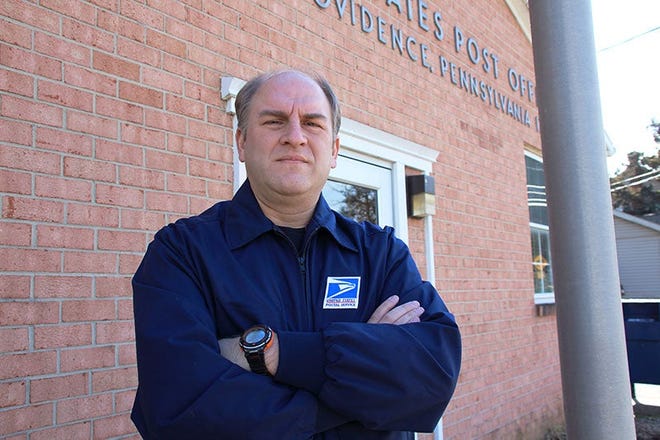
WASHINGTON – Gerald Groff needed to spend his Sundays at church. His employer, the U.S. Postal Service, needed him delivering packages.
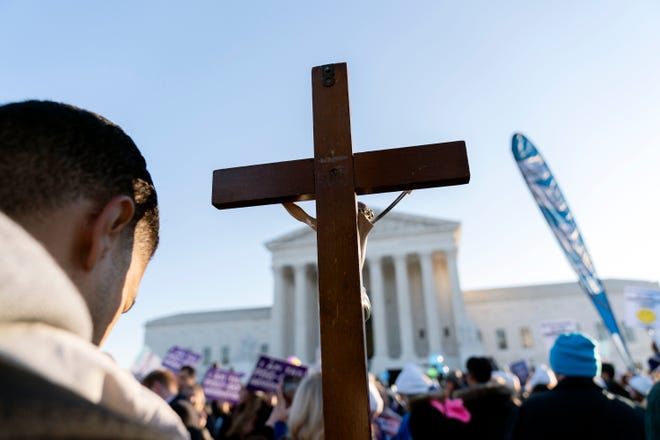
That easy dispute between an worker and his managers sparked one of the important spiritual circumstances to achieve the Supreme Court docket in years – with the potential to shift the stability of energy between staff and employers over weekend schedules, gown codes and the way staff conduct themselves round colleagues.
The enchantment raises a fundamental query with probably sweeping penalties: How far should massive employers go to accommodate the spiritual wants of their staff? For Groff, an Evangelical Christian who informed his boss in 2017 that he wouldn’t cowl Sunday shifts due to his religion, the reply grew to become a private and painful one.
“I lived underneath a cloud of pondering any day I may report back to work…after which be informed that I used to be terminated,” mentioned Groff, a 45-year-old Pennsylvanian who resigned from the Postal Service in 2019. “Two years of simply just about day-after-day was robust.”
Tracker:A have a look at the important thing circumstances pending on the Supreme Court docket
Israel:How a combat over a homosexual marriage ceremony cake acquired caught up in Israeli politics
For practically 5 many years, related disputes have been guided by a 1977 Supreme Court docket resolution that permits employers to disclaim spiritual requests in the event that they current greater than a trivial price. That meant corporations may decline to change schedules to account for a sabbath or enable an worker to put on a turban in most circumstances.
Groff is asking the Supreme Court docket to toss that customary. However his critics concern what the courtroom’s conservative majority may provide you with as a substitute. And so they’re involved that new customary may result in office discrimination.
“There’s an enormous can of worms that this opens up,” mentioned Rachel Laser, president of People United for Separation of Church and State. “Letting folks shift the price of exercising their faith onto their co-workers in a method that harms their co-workers is the alternative of equality.”
The courtroom will hear arguments in Groff v. DeJoy on Tuesday.
How Amazon packages delivered a sweeping spiritual dispute
Groff began on the Postal Service after years of missionary work in Africa and Asia. He needed a profession that might enable him to maintain his sabbath, and since mail isn’t delivered on Sundays, the job gave the impression to be a protected guess. All the pieces modified when the USPS signed a contract with Amazon in 2013 to ship packages on weekends.
His supervisors initially exempted Groff from working Sundays so long as he lined different shifts. However their makes an attempt to seek out volunteers for these days didn’t at all times work, and by 2018, Groff had missed 24 Sunday shifts. Disciplinary measures started mounting.
Groff mentioned he didn’t hear grumbling from colleagues.
“In the event that they needed to work a Sunday for me, I may remind them that I’ll have labored Thanksgiving for them,” mentioned Groff, who’s represented by First Liberty Institute, a gaggle that has introduced a number of profitable spiritual claims to the nation’s highest courtroom.
Labor:Girls executives outnumbered 5 to 1, girls of colour 26 to 1
Incapacity:How one scholar’s lawsuit may make colleges extra accountable
Nonetheless, not less than one trade group and a number of other unions opposing Groff fear in regards to the fallout if extra staff develop into entitled to time without work for spiritual holidays and sabbaths. A brand new customary, some concern, may make a multitude of seniority programs which have been negotiated to take care of shifts few need to work.
“Most pilots would favor to not fly a trans-continental redeye on Christmas Eve,” Airways for America, a commerce group, informed the courtroom in a short final month. Seniority programs, the group mentioned, make sure that “pilots are assigned to all of the flights that must be flown.”
Groff’s case may have an effect on greater than an organization’s scheduling, specialists say. A win for Groff, for example, may assist a trainer who, primarily based on spiritual beliefs, declines to make use of transgender pronouns within the classroom. It may reinforce pharmacists who decline to fill contraception prescriptions primarily based on faith.
“This case is a wolf in sheep’s clothes,” Laser mentioned.
James Phillips, a legislation professor at Chapman College, mentioned the case has the potential to be the “most wide-reaching spiritual liberty case in roughly half a century.” However he pushed again on the notion it’d open the floodgates to different kinds of claims.
“For individuals who it is not actually a robust spiritual want, it’s not as massive a deal to work on Sunday,” he mentioned.
Resetting the usual
Groff has not less than two issues working in his favor on the Supreme Court docket.
The primary is that the usual the justices set within the 1977 resolution is the type of court-created coverage extensively disfavored as we speak. Federal legislation requires employers to honor an worker’s spiritual request so long as it doesn’t symbolize a “undue hardship” on their enterprise. The Supreme Court docket outlined that time period in 1977 as something having greater than a “de minimis,” or trivial price, for the enterprise.
However that definition is not within the legislation, some extent even a few of Groff’s critics acknowledge.
Groff’s argument, in the meantime, is more likely to resonate with the Supreme Court docket’s conservative majority, which has handed spiritual pursuits a gradual collection of current wins.
Pray:Supreme Court docket backs ‘praying coach’ Joseph Kennedy
SCOTUS:Faculties providing spiritual instruction could also be entitled to state tuition assist
Flag:Boston cannot deny Christian flag if it flies different flags on Metropolis Corridor flagpole
Final yr, the courtroom sided with a highschool soccer coach who needed to hope on the 50-yard line after video games. In 2021, it allowed a Catholic foster care company to show away same-sex {couples} as potential mother and father. In 2019, the courtroom dominated {that a} Latin cross on authorities land exterior Washington, D.C., didn’t should be moved or altered within the identify of church-state separation.
For spiritual teams, the Groff case is the most recent alternative to proper what they see as a decades-old improper.
“The employer has to indicate that it should damage ultimately” to honor an worker’s spiritual request, mentioned Mark Rienzi, president of Becket, which has represented spiritual purchasers on the Supreme Court docket. “It is not sufficient to only say, ‘I would relatively not.'”

Share this content: